
 CN
CN
 English
Project Background
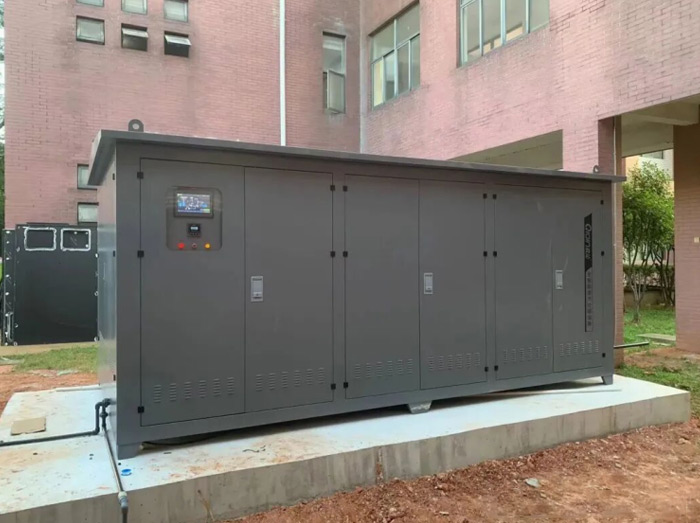
Wuhan Textile University is a provincial key university with a focus on engineering, and coordinated development of multiple disciplines including science, engineering, humanities (arts), economics, management, law, and education. It is expected that the daily production of laboratory wastewater will reach 9 tons. The composition of the wastewater is complex, and some of it is corrosive and cannot be directly discharged into the municipal pipeline network. Qiqin adopts a modular processing+intelligent control full process solution to provide customers with 10T/D wastewater treatment equipment. Since the operation of the system, all wastewater treatment has achieved standard discharge and meets the requirements of national/local environmental protection policies.
Wastewater characteristics:
1. Complex composition : containing acidic, alkaline, organic solvents, heavy metals (such as lead, chromium, cadmium, mercury), microbial cultures, etc., with significant fluctuations in water quality and quantity.
2. Toxicity and hazard : Some wastewater has corrosiveness and cannot be directly discharged into the municipal pipeline network.
3. Strict emission standards : It is necessary to meet both the "Water Quality Standards for Sewage Discharged into Urban Sewers" (GB/T 31962) and the stricter emission limits set by local environmental protection departments . .
Core Challenge:
1. Difficulty in classification and collection : There are many types of wastewater generated by different laboratories, and source classification and collection management are huge challenges.
2. Difficulty in integrating processing technologies : There is no universal technology that can handle all pollutants, and an integrated and intelligent combination process is needed.
3. Safety and compliance risks : The system must be absolutely safe and reliable, prevent accidents such as leaks, poisoning, explosions, and pass environmental inspections.