
 CN
CN
 English
Upgrading Guide for Laboratory Water: How can the Central Pure Water System safeguard the accuracy of experiments?
In the laboratory, a drop of water with substandard quality may undo several days of experimental results. From chemical analysis to biological cultivation, from instrument cleaning to reagent preparation, almost all experimental processes rely on high-purity water. Traditional decentralized pure water equipment has problems such as unstable water quality, high energy consumption, and tedious maintenance. However, the central pure water system in the laboratory has become a "stabilizer" and "energy-saving manager" for modern laboratory water use through a centralized water production and quality based water supply model. Today, we will take you through a comprehensive understanding of this' invisible laboratory infrastructure '. Why does the laboratory need "customized grade" pure water?
Different experiments have vastly different requirements for water quality. Choosing the wrong water quality not only affects the experimental results, but may also damage precision instruments. The International Organization for Standardization (ISO) classifies experimental water into three levels, corresponding to different application scenarios:
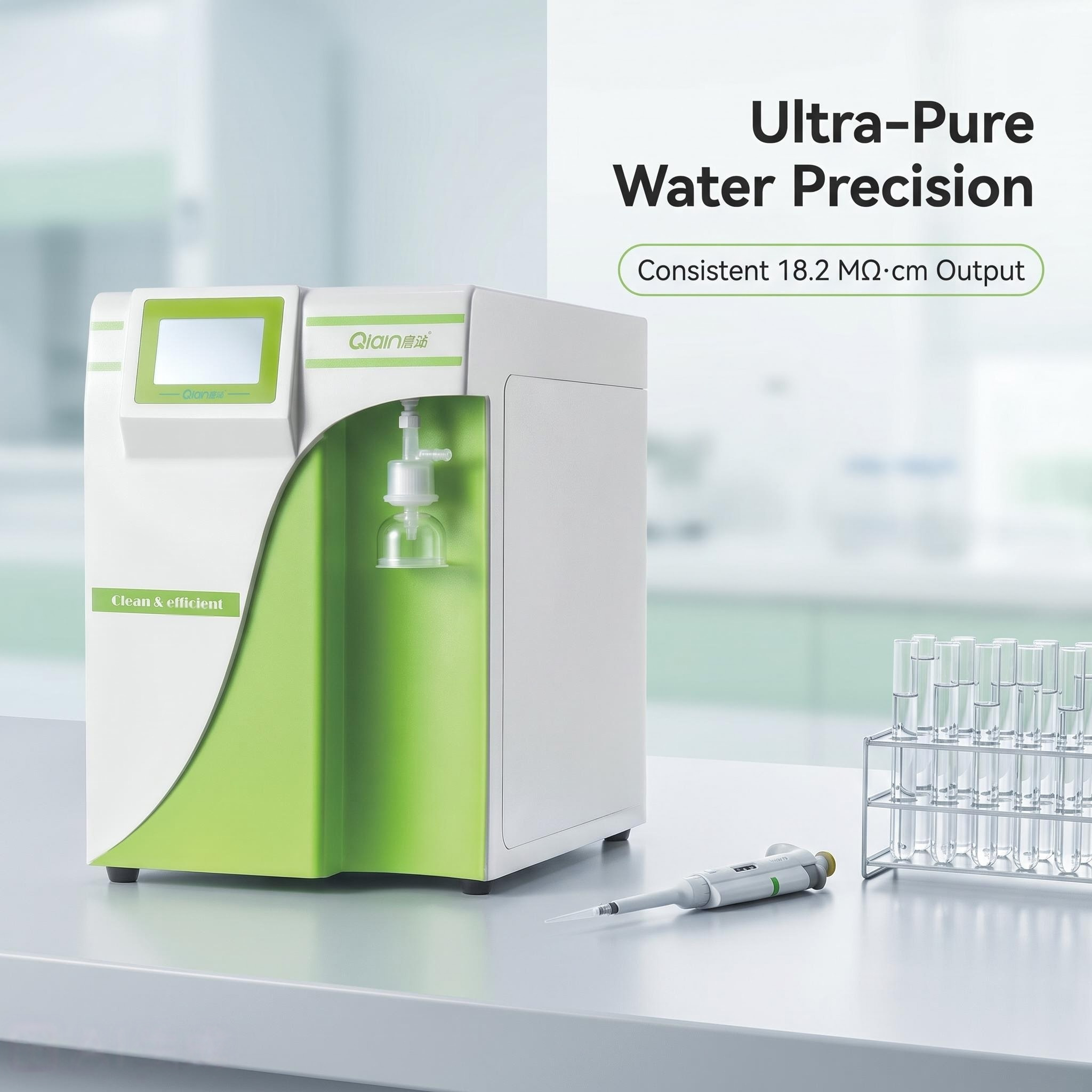
01 Type I water (ultrapure water) resistivity of ≥ 18.2 M Ω· cm (25 ℃), total organic carbon (TOC) ≤ 10 ppb, and almost no impurities. It is suitable for impurity sensitive experiments such as high performance liquid chromatography (HPLC), atomic absorption spectroscopy (AAS), mass spectrometry analysis, and molecular biology experiments (such as PCR and gene sequencing).
02 Type II water resistivity of ≥ 1M Ω· cm and TOC ≤ 50ppb. It can be used for preparing reagents, buffer solutions, microbial culture, spectral analysis, and other experiments. It can also be used as an inlet water source for primary water.
03 Type III water resistivity of ≥ 0.2M Ω· cm and is mainly used for basic scenarios such as glassware cleaning, constant temperature and humidity box replenishment, and ordinary chemical experiments. It can be obtained from tap water through primary treatment. The "core architecture" of the central pure water system
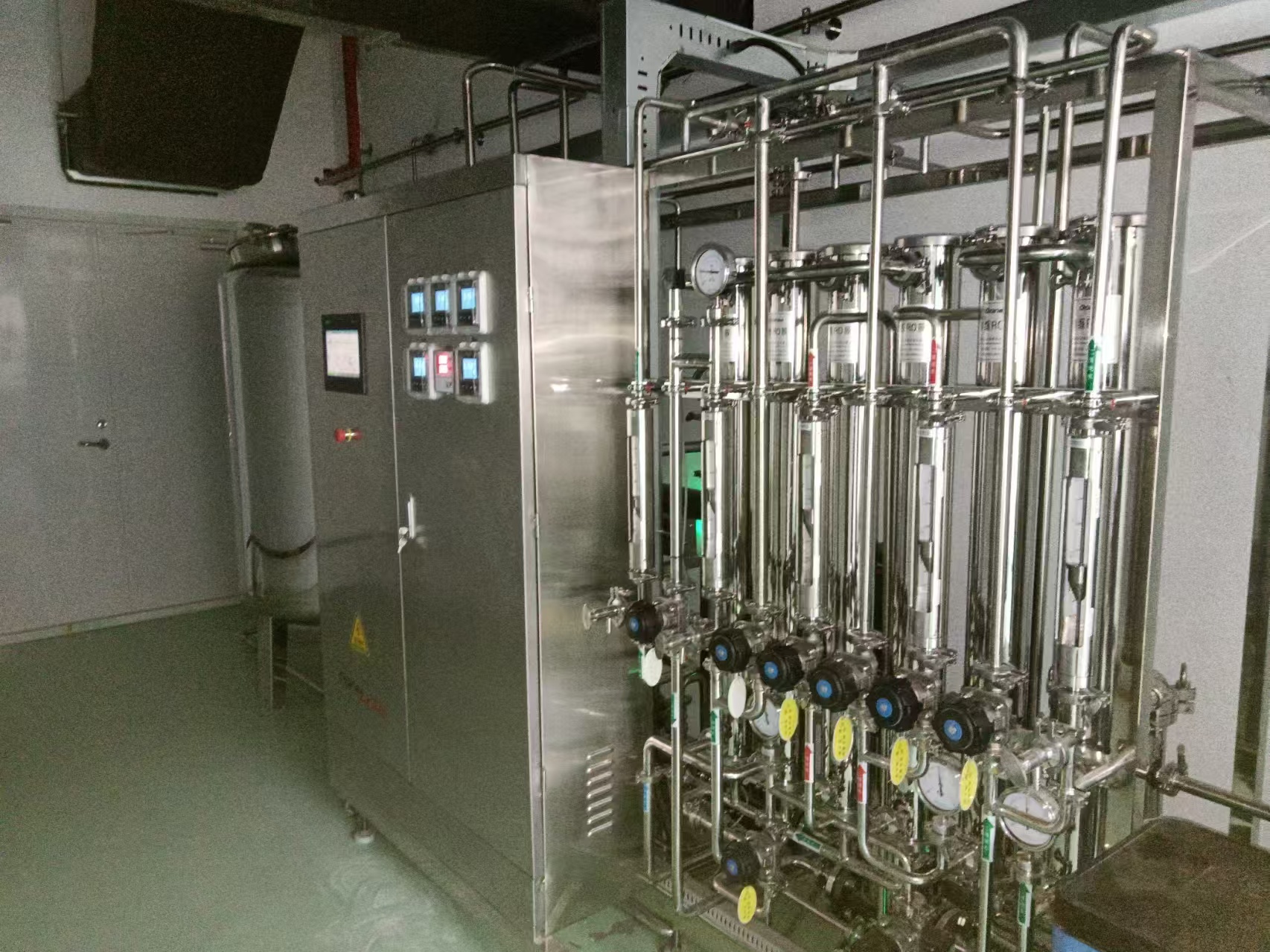
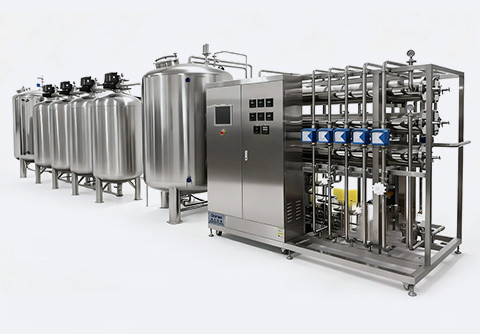
The system converts tap water into various levels of pure water through four modules:
· Pre treatment module: treated with quartz sand, activated carbon, softener, and precision filter to remove suspended solids, residual chlorine, calcium and magnesium ions, and fine particles.
· Deep desalination module: The reverse osmosis device pressurizes the water molecules to pass through the semi permeable membrane. The single-stage reverse osmosis desalination rate exceeds 97%, and the two-stage desalination rate reaches 99.5%, meeting the secondary water standard.
· Purification module: EDI device further removes ions, combined with polishing mixed bed, can achieve a resistivity of 18.2M Ω· cm; UV oxidizer degrades TOC and kills microorganisms.
· Storage and distribution module: stainless steel water storage tank with air filter, sanitary grade pipeline circulating 24 hours through constant pressure variable frequency pump, and terminal filter installed at water points to ensure water quality.
The "core advantage" of the central pure water system
· Water quality is more stable: multi-stage treatment with real-time monitoring, water quality fluctuation ≤ 5%, avoiding sudden changes in water quality caused by single equipment failure.
· Lower cost: centralized water production efficiency is over 30% higher, and the utilization rate of two-stage reverse osmosis water reaches 75%; Extended consumable replacement cycle, intelligent frequency conversion saves 20-30% annually.
· has higher space utilization: equipment is centrally installed, pipelines are concealed, does not occupy experimental bench space, and water point interfaces are flexibly adapted to instruments.
· Management is more intelligent: the PLC control system displays parameters in real time, automatically alarms for abnormalities, supports remote monitoring, and historical data can be traced, meeting certification requirements.
How to select the central pure water system?
01 Clarify the water demand
Based on the type and scale of experiments conducted in the laboratory, as well as specific requirements for water quality, determine the required level of pure water (such as Type 1 water, Type 2 water, Type 3 water), water volume, and water quality indicators (such as resistivity, TOC, microbial content, etc.).
02 Examining system performance
Focus on key performance indicators such as water production capacity, water quality stability, consumable replacement cycle and operating cost. Choose products with advanced technology, high-quality components and a good reputation to ensure the system operates stably over the long term and provides reliable pure water for the laboratory.
03 After-sales service
A complete after-sales service system is crucial. Choose suppliers that provide prompt response, professional installation and commissioning, regular maintenance and technical training to ensure that any issues encountered during system use can be resolved in time and the system's lifespan is extended.
Qiqin Central Pure Water System
It produces water that meets the EU CE standards and the highest water quality standards established by GB6682-2008, ASTM, CAP, CLSI, EP, and USP.
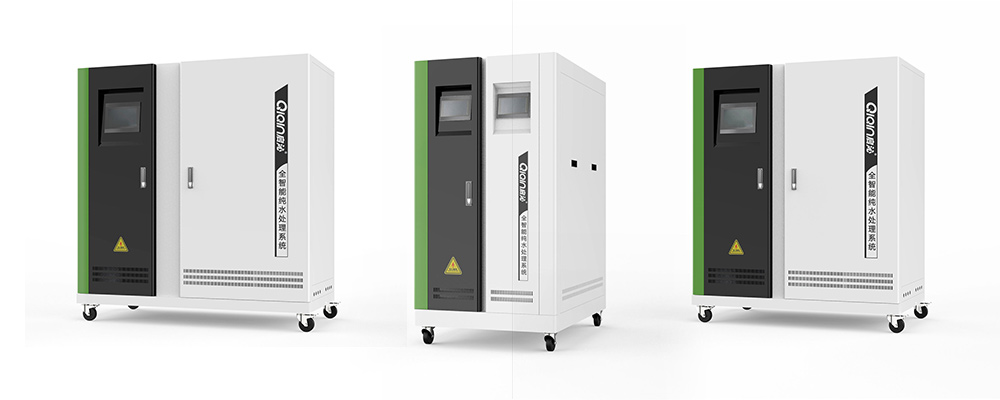
Laboratory Central Pure Water System (Dual core Integrated Machine) Product Features and Advantages:
Dual module uninterrupted water production, adaptive high and low peak water supply;
Dual 10 inch high-definition touch screen, minimalist interactive design;
Six channel high sensor, real-time monitoring of water quality;
dual modules are fully built-in and integrated, occupying an area of less than 2 square meters;
Date and clock settings, optional timed power on/off, fault and alarm recording;
Antibacterial design, sterilization respirator;
dual band ultraviolet sterilization, strict control of bacterial growth in water bodies;
permission confirmation, security protection;
Water electricity separation, voltage safety protection;
Built in integrated water tank.