
 CN
CN
 English
Guide to Choosing Wastewater Treatment Equipment: How to Choose Trustworthy Products
Have you encountered these difficulties when choosing wastewater treatment equipment?
With the increasingly strict environmental policies, various scientific research, medical, and industrial scenarios have higher compliance requirements for wastewater treatment. But many users often encounter many difficulties when choosing wastewater treatment equipment: Either the brands are mixed, and they don't know which manufacturer is reliable; Either the purchased equipment occupies a large area and requires dedicated personnel to be on duty, resulting in high maintenance costs; Either the effluent is unstable and unable to meet the standard, facing the risk of environmental penalties; Either it cannot adapt to business growth and needs to replace equipment quickly, resulting in investment waste. This article will provide a clear and objective decision-making framework from a professional perspective to help you scientifically evaluate products, avoid common pitfalls, and choose wastewater treatment equipment that truly meets your needs.
The five core selection criteria for excellent wastewater treatment equipment:
Compliance and adaptability
Qualified wastewater treatment equipment must first meet the environmental discharge standards of the corresponding industry and project location. Different scenarios (laboratory, medical, industrial) have different types of wastewater pollutants, and there are also differences in discharge requirements in different regions. Excellent products should be able to comply with multiple national and local standards, and the treatment process can be adjusted according to actual needs to avoid compliance risks from the root.
Intelligent operation and maintenance capabilities
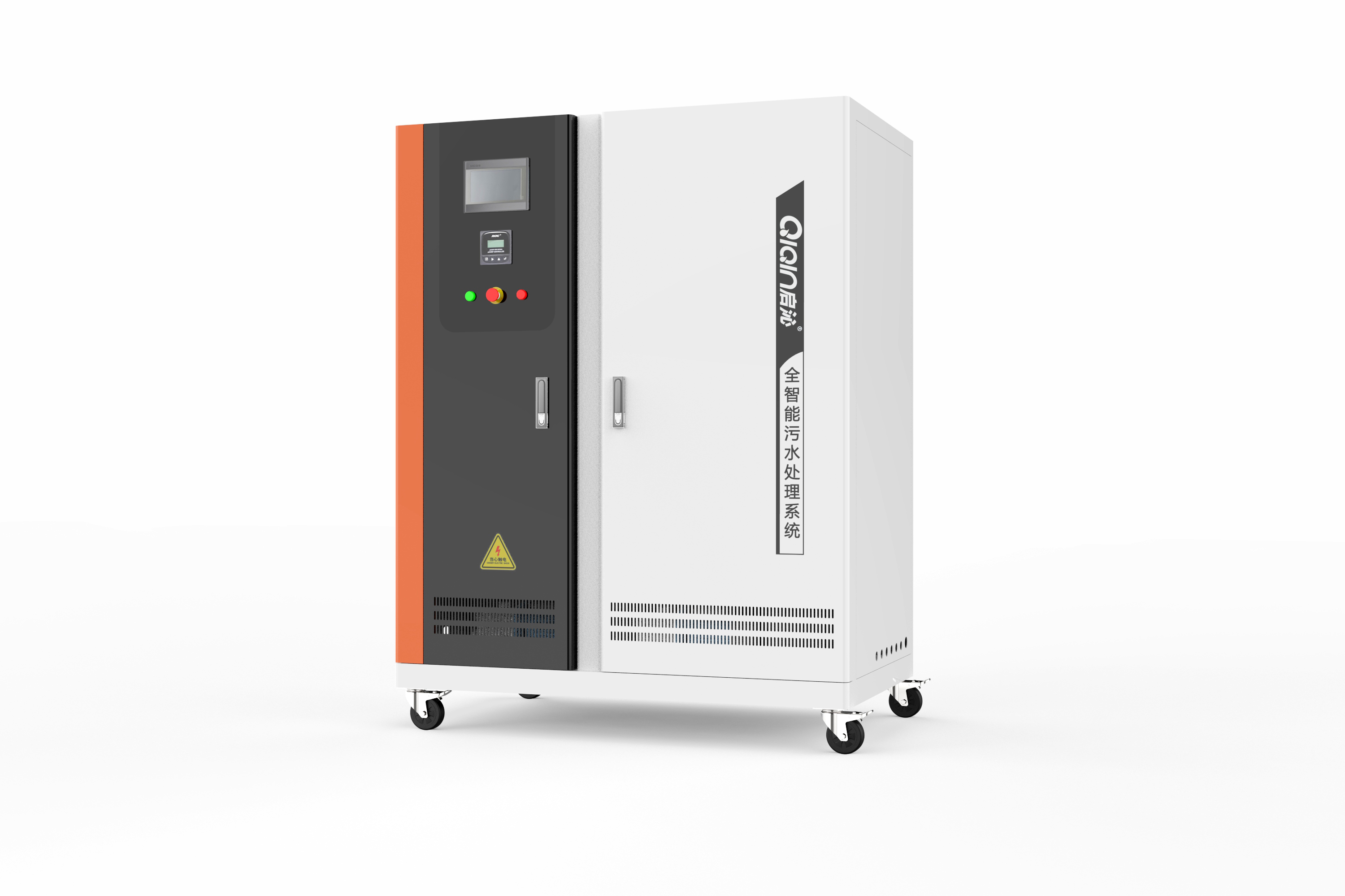
Intelligence is the core competitiveness of current wastewater treatment equipment. Excellent products should achieve full process automation operation: Support automatic start stop of water inlet, liquid level linkage, automatic dosing, regular automatic discharge, without the need for dedicated personnel to be on site; At the same time, it has the functions of fault warning and long-term storage of operational data, meeting the traceability requirements of environmental verification, which can significantly reduce labor and operation costs.
Space adaptation and scalability
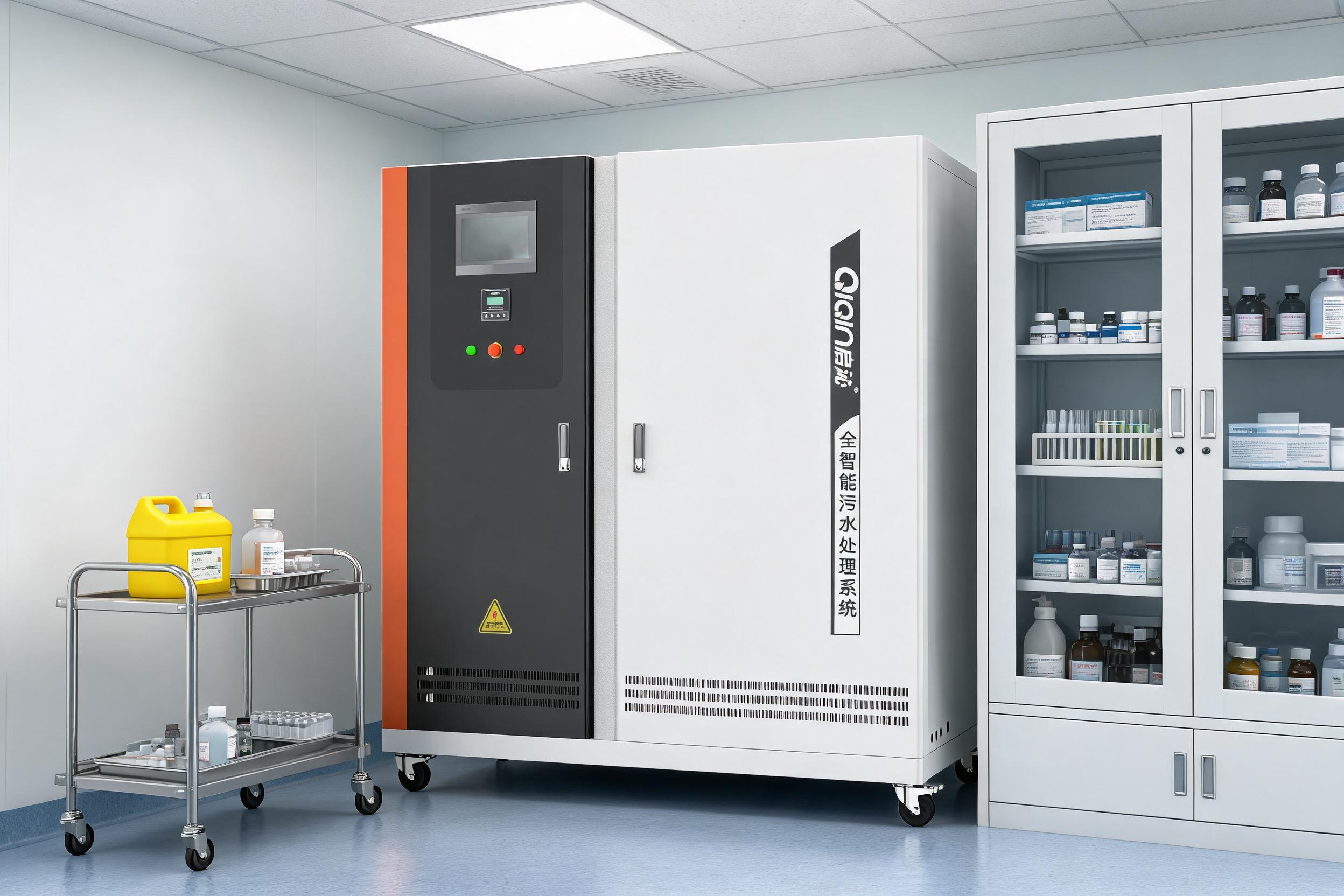
Most laboratories, medical institutions, and small and medium-sized enterprises have limited installation sites. Excellent equipment should have compact design, small footprint, and can be directly installed without additional civil engineering works; At the same time, it supports modular expansion. When the user's business expands and the amount of wastewater increases, the capacity can be improved by adding new processing units without the need to replace the entire machine, effectively protecting the user's initial investment.
Full chain service capability
Wastewater treatment equipment is a long-term system engineering, not a simple hardware transaction. A reliable manufacturer should be able to provide a full chain service from preliminary scheme design, on-site investigation, installation and commissioning, compliance verification, to long-term operation and maintenance, and consumables supply, and have a complete localized service network that can quickly respond to fault requirements and ensure the continuous and stable operation of equipment.
High cost performance throughout the entire lifecycle
When selecting equipment, it is not enough to only look at the initial purchase price, but also to comprehensively evaluate the initial investment and long-term operating costs. Manufacturers with independent production capabilities can eliminate intermediate links, provide more reasonable prices while ensuring performance, and reduce long-term energy and chemical consumption through energy-saving design, achieving lower comprehensive costs throughout the entire lifecycle.